Professional ventilation solutions designed specifically for poultry houses, dairy barns, and swine facilities
Proper ventilation is the lifeline of any livestock operation. In enclosed animal housing, accumulated ammonia, hydrogen sulfide, and carbon dioxide from manure and respiration threaten respiratory health and productivity. During summer months, heat stress can reduce feed intake, lower milk and egg production, and increase mortality rates. Excess humidity promotes bacterial growth and disease transmission. Sailair's livestock ventilation solutions address these challenges head-on — delivering high-volume air exchange to remove harmful gases, reduce temperature and humidity, and create a comfortable environment that supports animal welfare and maximizes productivity year-round.
Understanding the environmental threats that impact animal health and farm profitability
Ammonia, hydrogen sulfide, and carbon dioxide accumulate rapidly in enclosed barns from manure decomposition and animal respiration. Prolonged exposure damages respiratory tract lining, suppresses immune function, and increases susceptibility to disease. Chickens are especially sensitive — even 20 ppm ammonia can reduce growth rates and egg production.
When barn temperatures exceed the thermal comfort zone, animals reduce feed intake to minimize metabolic heat production. Dairy cows can drop milk yield by 10–25% during heat waves. Laying hens produce fewer and smaller eggs. Swine show reduced daily weight gain. In extreme cases, heat stress causes direct mortality, especially in densely stocked facilities.
Excess moisture from animal respiration, manure, and drinking systems creates a breeding ground for bacteria, viruses, and fungi. High humidity promotes respiratory infections, skin conditions, and lameness. Wet litter in poultry houses leads to foot pad dermatitis and caked manure. Condensation on walls and ceilings accelerates building deterioration and shortens facility lifespan.
Loud, poorly designed fans create constant noise that elevates stress hormones in livestock. Chronic noise exposure reduces feed conversion efficiency, increases aggression and restlessness, and can trigger stampedes in swine. In poultry, noise stress leads to feather pecking and reduced laying performance. Quiet fan operation is essential for animal welfare and optimal production.
Purpose-engineered barn fans that deliver fresh air, remove harmful gases, and protect animal welfare
Sailair's livestock ventilation system combines high-volume air exchange with quiet, energy-efficient operation. Our Livestock Barn Fans feature large-diameter blades engineered for wide-area coverage, while our Exhaust Fans create powerful negative pressure to rapidly purge harmful gases and hot, humid air. Together with Air Coolers for summer heat relief, this integrated approach maintains optimal temperature, humidity, and air quality across all seasons.
Extra-wide blade design moves massive air volumes per rotation, achieving 200–500m² coverage per fan. Ensures thorough air exchange and eliminates stagnant dead zones in long barns.
Precision dynamic balancing and aerodynamic blade profiles keep noise at ≤62dB. Animals remain calm and stress-free, supporting natural feeding and resting behavior for better productivity.
Adjustable speed settings adapt ventilation rates to seasonal needs — high speed for summer cooling, low speed for gentle winter air exchange without cold drafts on young animals.
Hot-dip galvanized steel housing and corrosion-resistant components withstand the harsh ammonia and humidity of livestock environments. Extended service life with minimal maintenance demand.
Tested and proven in poultry houses, dairy barns, and swine farms worldwide
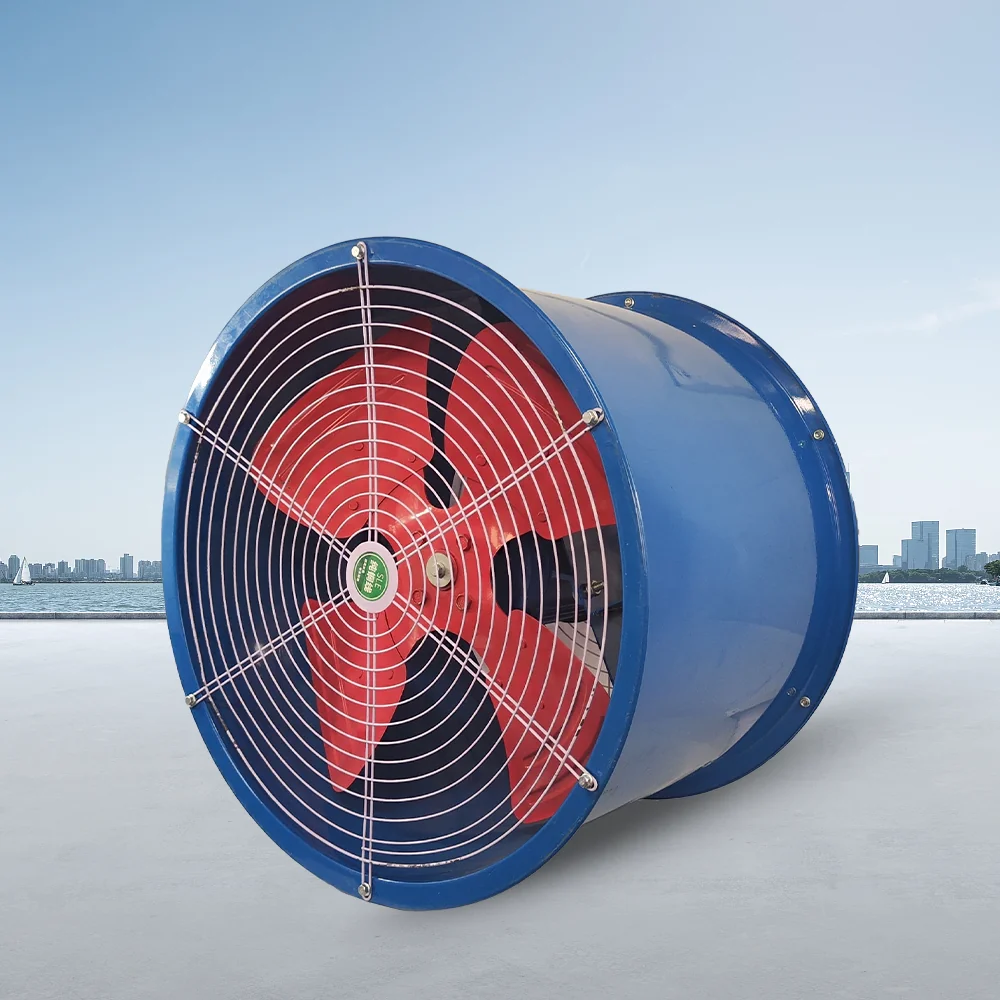
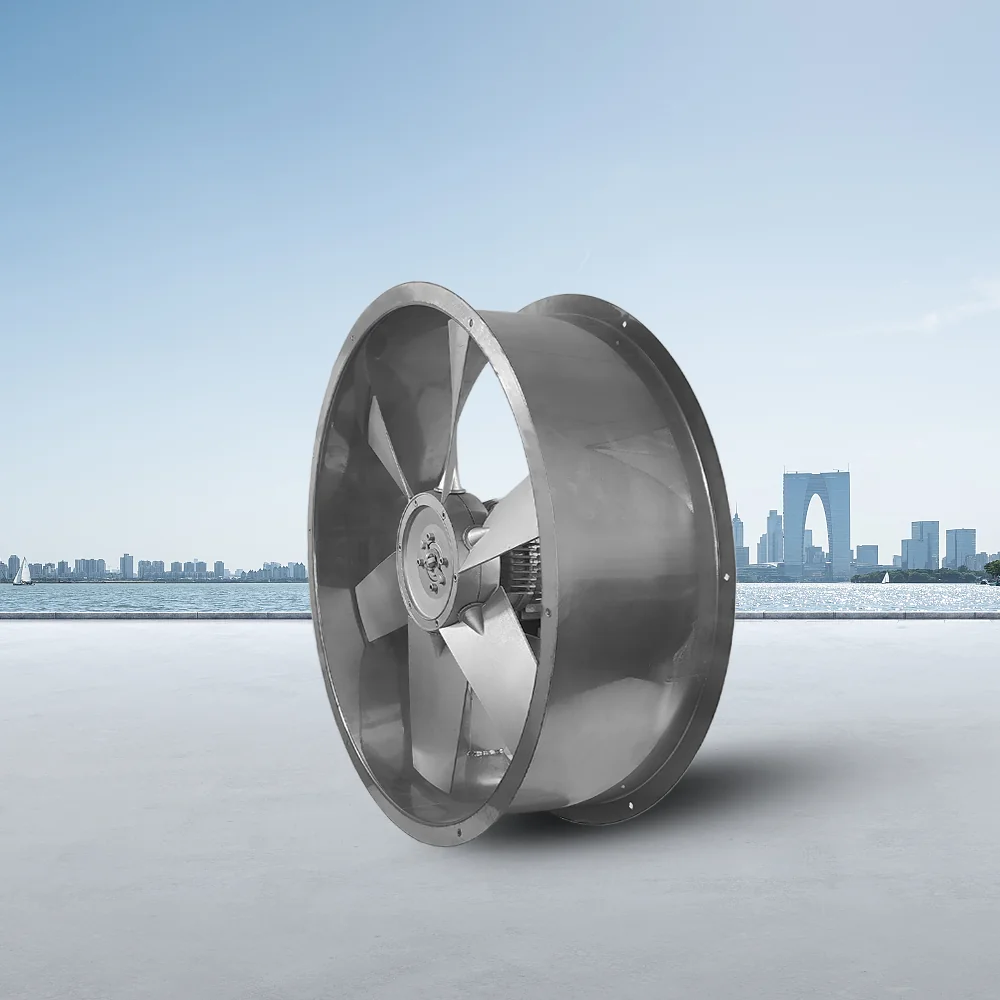
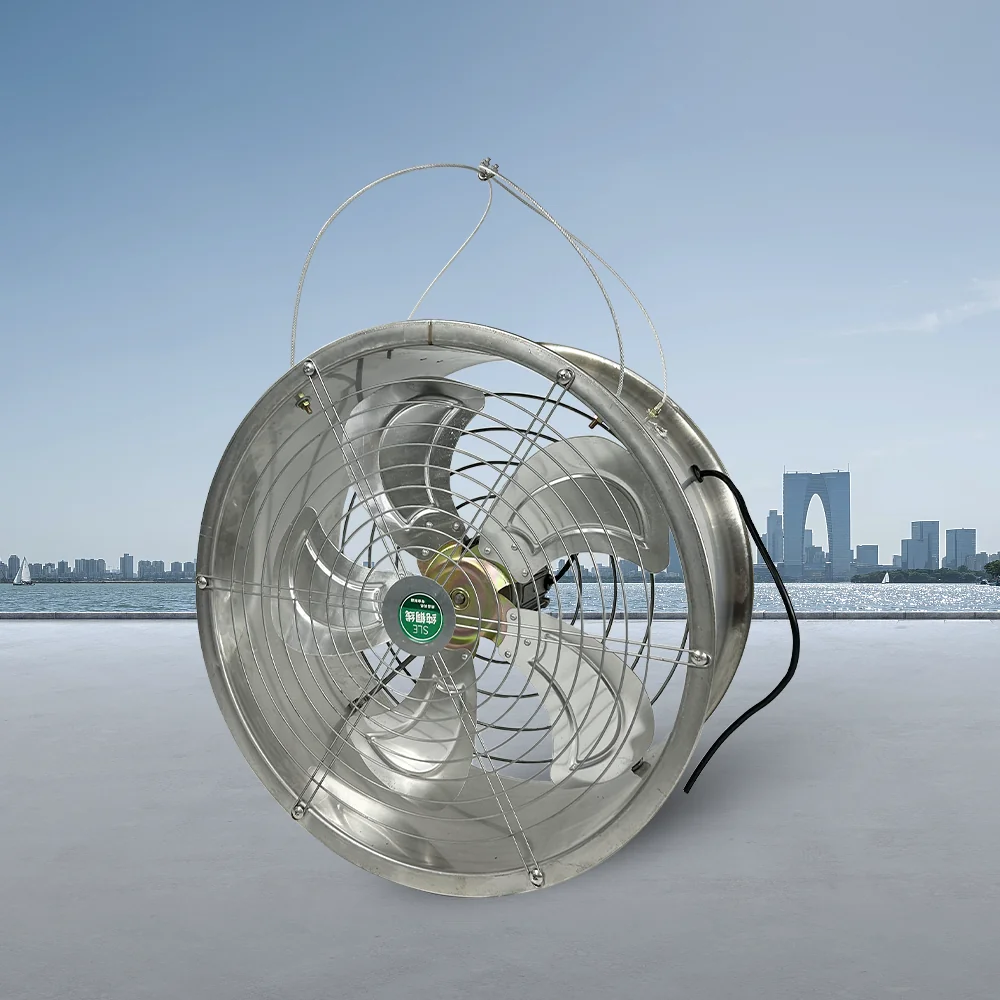
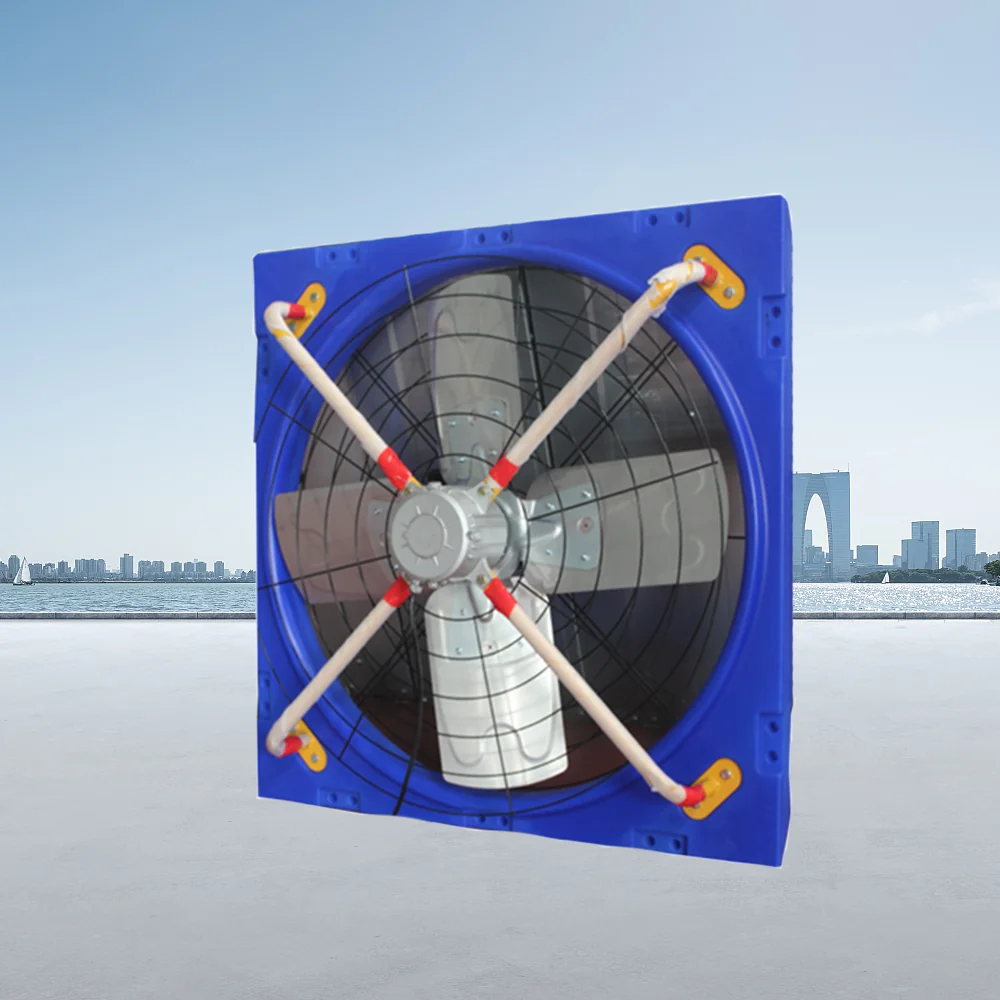
Purpose-built ventilation fan for livestock environment control. Large-diameter blades deliver wide coverage up to 500m². Quiet operation (≤62dB) keeps animals stress-free. Galvanized anti-rust construction withstands ammonia and humidity. Multi-speed adjustment for seasonal ventilation needs.
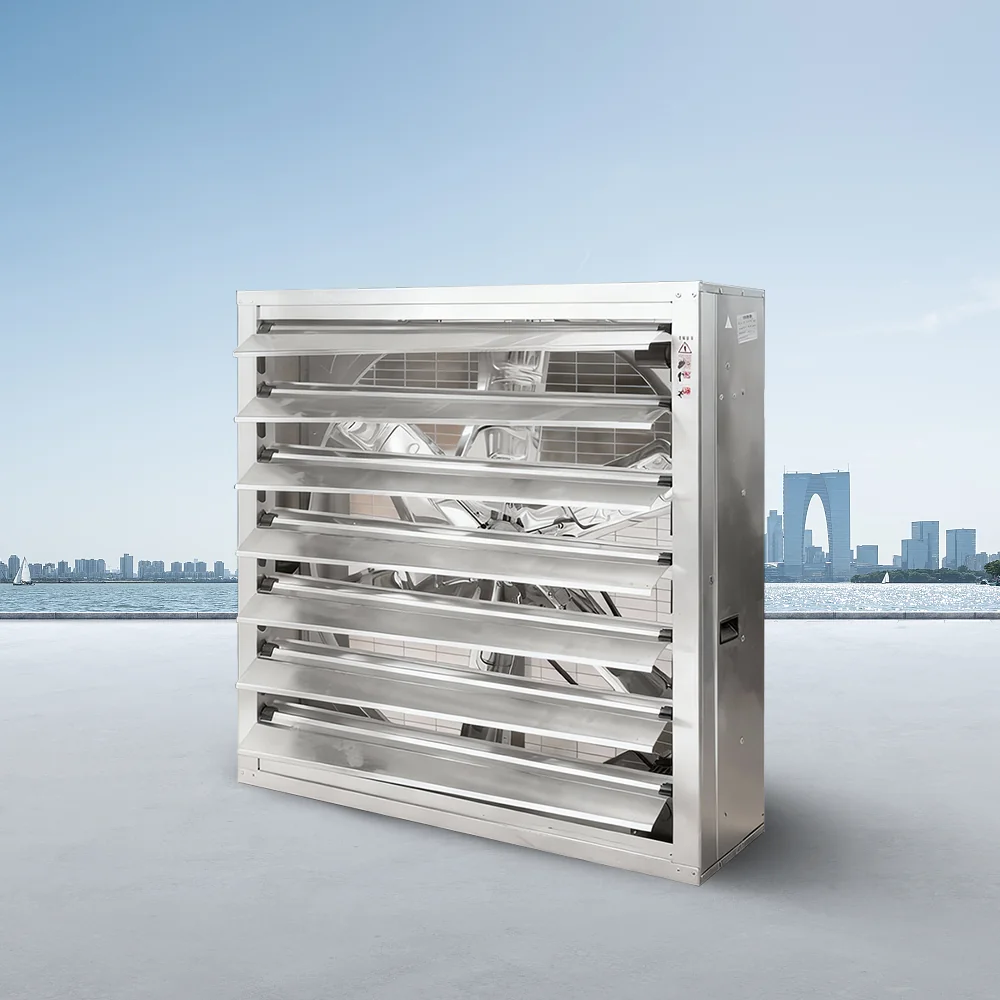
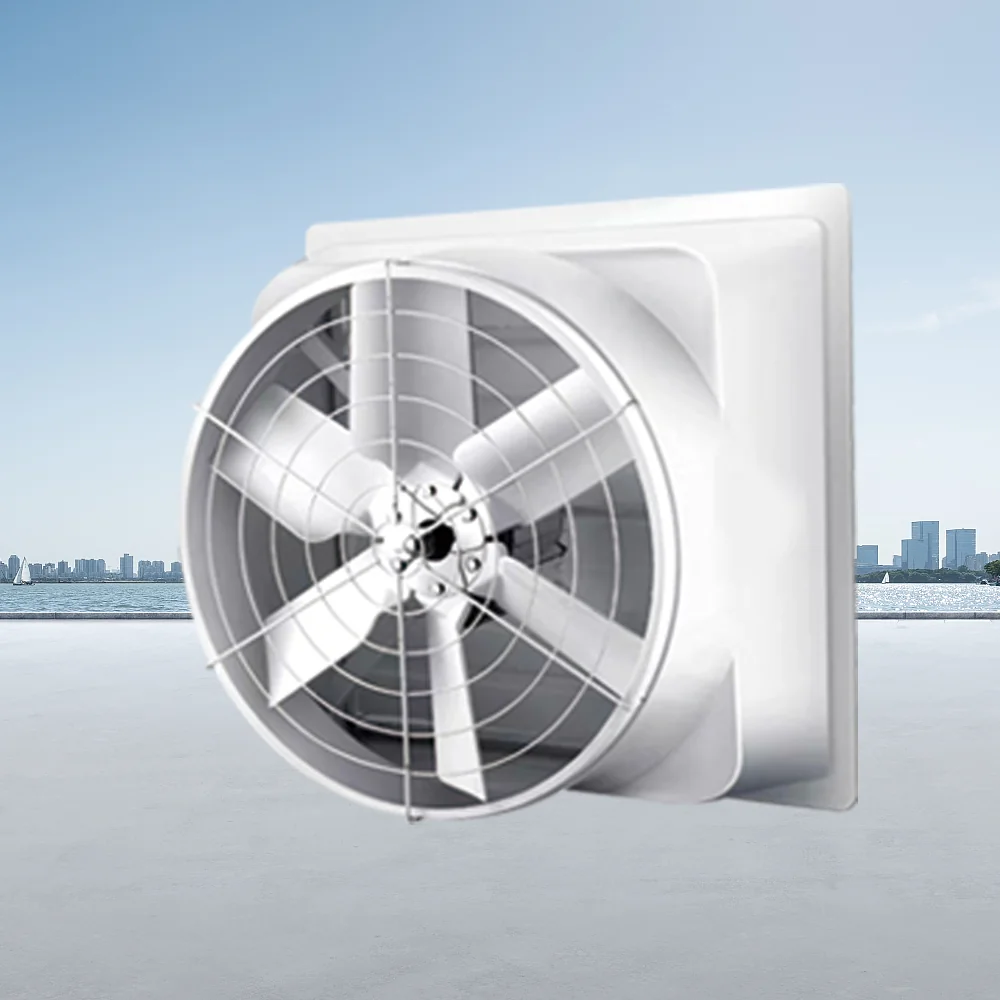
Negative pressure exhaust fan for rapid removal of ammonia, humidity, and hot air from livestock barns. Creates powerful air convection for efficient ventilation. Automatic shutter opens and closes with airflow. Available in heavy-hammer, push-pull, and direct-drive structures with 13 models.
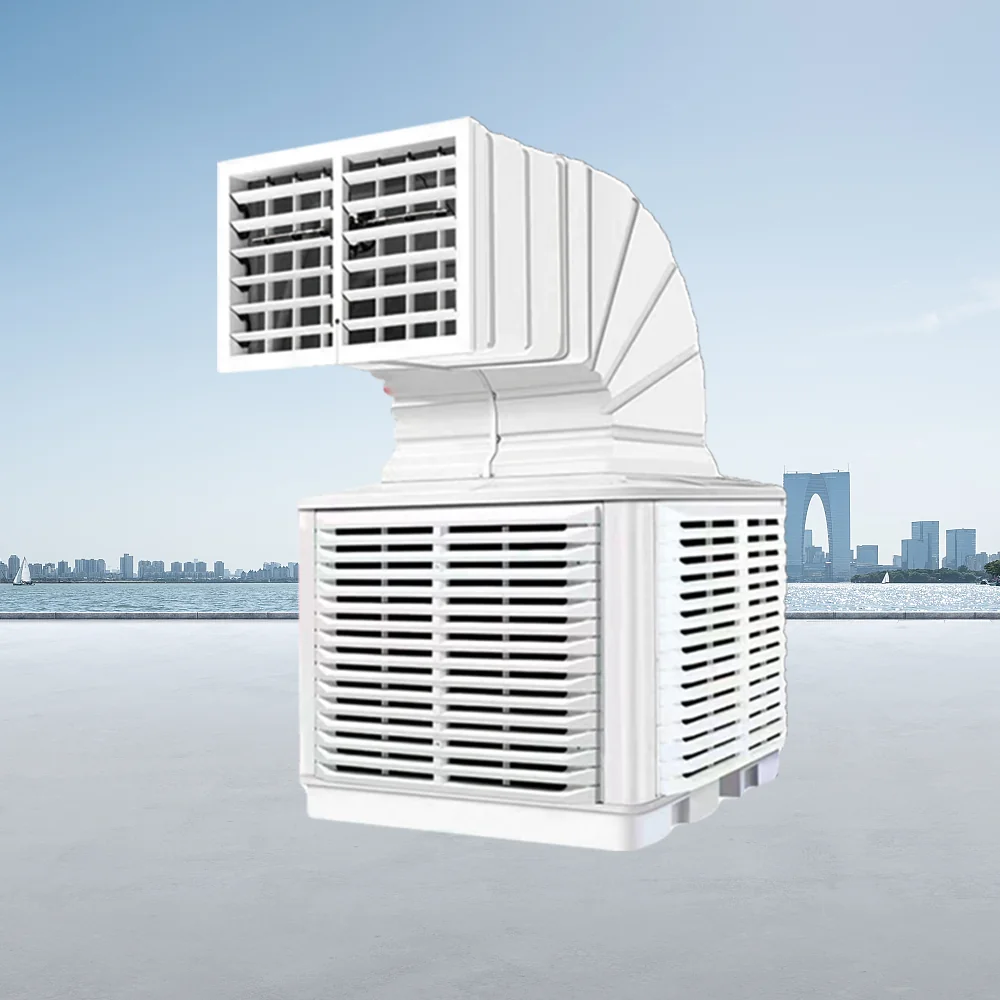
Evaporative cooling solution for summer heat stress prevention in livestock facilities. Uses water evaporation principle to rapidly reduce air temperature by 4–10°C. Simultaneously provides ventilation and cooling — energy-saving and eco-friendly with low operating cost. Ideal for large-span poultry and dairy barns.
Trusted by livestock operators worldwide to protect animal welfare and improve productivity
Deployed across poultry houses, dairy barns, and swine facilities globally
Large-diameter blades deliver wide-area air exchange for efficient ventilation
Precision-balanced blades keep noise low to minimize animal stress
Adjustable ventilation rates for summer cooling and winter minimum air exchange
Sailair barn fans and exhaust fans have been successfully deployed in livestock farm projects across Kazakhstan, where extreme temperature swings from -30°C winters to +40°C summers demand robust, adaptable ventilation. Our multi-speed control and galvanized anti-rust construction ensure reliable year-round performance in these harsh Central Asian conditions, supporting healthy herds and consistent productivity for local operators.
Common questions about livestock ventilation fan selection, operation, and maintenance
How do I size livestock ventilation fans for my barn?
Fan sizing depends on barn dimensions, animal type and stocking density, and local climate. A general rule is 1m³ of fan capacity per hour per kg of live body weight for minimum winter ventilation, increasing to 4–6 times that rate for summer cooling. Each Sailair barn fan covers approximately 200–500m² depending on ceiling height and layout. We recommend a combination of exhaust fans for tunnel ventilation plus circulation fans to eliminate dead zones. Contact our engineering team for a free sizing calculation tailored to your facility.
How effective are Sailair fans at removing ammonia from livestock barns?
Our exhaust fans create negative pressure that continuously draws out ammonia-laden air and replaces it with fresh outside air. When properly sized and positioned, the system can maintain ammonia levels below 20 ppm — the safe threshold for poultry and livestock. For facilities with high manure output, we recommend combining exhaust fans with circulation fans to ensure uniform air mixing and prevent ammonia pockets in corners or under low ceilings. Regular litter or manure management remains essential for optimal results.
How should I operate the ventilation system differently in winter vs. summer?
In summer, run fans at high speed with all exhaust fans active for maximum air exchange and combine with air coolers for evaporative cooling. In winter, reduce to minimum ventilation speed to remove moisture and gases without creating cold drafts — typically 10–15% of summer capacity. Our multi-speed control makes this transition simple. For young animals and brooding rooms, use lower speeds and direct airflow away from animal zones. Always prioritize minimum continuous ventilation even in cold weather to prevent humidity and gas buildup.
What maintenance do livestock barn fans require?
In the harsh livestock environment, we recommend monthly inspection of blades for dust and manure accumulation — clean with a soft brush or low-pressure water spray. Check automatic shutters for free movement and clean tracks quarterly. Inspect belt tension on belt-drive models every 3 months and replace belts showing wear. Lubricate motor bearings annually per the manual. Check electrical connections and control panels for corrosion. Galvanized housings require no painting, but inspect annually for coating damage. With proper maintenance, Sailair barn fans typically deliver 5–8 years of reliable service.
Tell us about your barn dimensions, animal type, and local climate. Our engineering team will design a customized ventilation solution and provide a detailed quote within 24 hours.
Request a Quote →